University of Surrey wedding flowers case study before and after
Posted on 23/10/2026
University of Surrey wedding flowers case study before and after: a practical guide to the transformation
If you are searching for a University of Surrey wedding flowers case study before and after, chances are you want more than pretty pictures. You want to see what actually changed, why the flowers worked, and how the final result felt in the space. Fair enough. Wedding flowers are one of those details that can quietly lift everything around them, or, if they are off, make the whole day feel a bit flat.
This guide breaks down how a before-and-after wedding flowers case study can help couples, planners, and venue teams make better decisions. We will look at the planning logic, the visual impact, the practical steps, and the common mistakes people make when designing flowers for a university setting like the University of Surrey. You will also find a checklist, a comparison table, and useful guidance on choosing arrangements that suit both the venue and the wedding style. In our experience, that mix of beauty and practicality is where the real value lives.
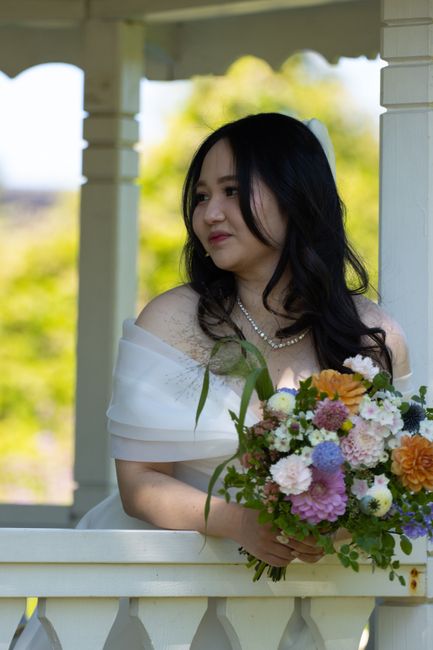
Why University of Surrey wedding flowers case study before and after Matters
A before-and-after case study is useful because it shows the effect of floral design, not just the flowers themselves. With a venue such as the University of Surrey, the setting can be modern, spacious, and practical rather than traditionally ornate. That means the flowers need to do real work: soften clean lines, add warmth, guide the eye, and make the ceremony or reception feel personal.
People often underestimate how much floral design changes a room. A few well-placed arrangements can make a registry-style space feel intimate. Tall focal flowers can help a hall or reception room feel more defined. Even the choice of colour palette can completely change the mood, from crisp and elegant to soft and romantic. And yes, sometimes the difference is more noticeable in the photos than in the moment - which is exactly why before-and-after examples are so helpful.
For anyone planning flowers at the University of Surrey, the case study format answers questions that normal product pages do not. It helps you see:
- how a venue looks before styling
- what floral changes create the biggest visual shift
- which arrangements suit the scale of the room
- how the flowers relate to the venue's architecture and lighting
- what feels realistic for the budget and setup window
That last point matters more than people think. Lovely flowers are great, obviously. But lovely flowers that arrive on time, suit the space, and hold up well through the day? That is the bit that makes a case study genuinely useful.
How University of Surrey wedding flowers case study before and after Works
At its simplest, a before-and-after wedding flowers case study compares the venue before installation with the venue once styling is complete. The goal is not just to show prettier pictures, but to explain the design choices that produced the transformation.
Here is the usual flow:
- Assess the room - the florist or planner looks at space, natural light, table layout, entrance points, and any existing features that should be highlighted or softened.
- Define the brief - this includes colours, flower preferences, season, style, and what must be prioritised, such as the ceremony arch, aisle flowers, or table centrepieces.
- Map the floral impact - the design is planned around where guests will look first, where photographs will be taken, and which areas need the most visual lift.
- Install and style - arrangements are placed with attention to scale, symmetry, movement, and practical flow.
- Review the result - before-and-after images help identify what worked, what felt balanced, and what could be refined next time.
In a university setting, this process can be especially important because the venue may need flowers to bridge the gap between formal architecture and wedding atmosphere. A table arrangement that looks fine in isolation can feel too small once placed in a wide room. Likewise, a dramatic arrangement might overpower a more intimate ceremony space. So the case study becomes a planning tool, not just a gallery.
If you are also choosing florals for other occasions, it can help to look at how a florist handles scale and consistency across different styles. You can see that thinking reflected in collections such as wedding arrangements and more specific pieces like bridal bouquets or table arrangements. Those product pages may not tell the whole story, but they do show how a design language carries through from one floral element to the next.
Key Benefits and Practical Advantages
The best before-and-after case studies do not just look satisfying. They give you decision-making confidence. That is a big deal when you are juggling venues, guest lists, timing, and all the other wedding bits that somehow become urgent at the same time.
1. You can judge scale properly
Scale is one of the most common floral problems in larger venues. A bouquet that looks generous on a workbench can seem tiny next to a high ceiling or broad aisle. A before-and-after comparison shows whether the arrangement holds its own or gets swallowed by the room.
2. You can see colour in context
White flowers in daylight can read very differently under indoor lighting. Soft blush tones may disappear if the room is already warm and beige. Case study images help you understand how colour behaves in the actual venue, which is far more helpful than looking at a single isolated product shot.
3. You can spot where flowers add the most value
Not every area needs a large arrangement. Sometimes the best transformation comes from just three or four well-chosen features: a ceremony focal point, a top table design, a signing table piece, and simple supporting flowers elsewhere. That is a sensible way to work, truth be told, especially if you want elegance without overspending.
4. You can compare styling approaches
Some couples prefer a polished, structured look. Others want looser, more natural arrangements. A case study makes the difference obvious. You can compare romantic roses with mixed seasonal blooms, or see whether bridesmaid bouquets should mirror the bridal bouquet closely or stay a little more relaxed.
5. You can reduce last-minute uncertainty
It is one thing to say, "We want elegant flowers." It is another to know what that means on the day. Before-and-after examples reduce guesswork. They give you a clearer sense of what is possible in the time available, which is especially useful if the setup window is tight.
| Planning focus | Before styling | After styling | Why it matters |
|---|---|---|---|
| Venue impact | Room may feel plain or formal | Space feels softer, warmer, and more personal | Helps guests feel the occasion immediately |
| Colour reading | Colours can look uncertain in sample photos | Colours are seen under the real lighting | Reduces surprise on the day |
| Scale | Hard to judge size from moodboards alone | Arrangement size can be compared to the room | Prevents under- or over-styling |
| Guest experience | Practical layout is unknown | Pathways and sightlines become clearer | Improves flow and comfort |
Who This Is For and When It Makes Sense
This kind of case study is most useful for couples planning a wedding at the University of Surrey, but it is not only for couples. Venue coordinators, photographers, planners, and family members helping with decisions can all benefit from seeing the transformation laid out clearly.
It makes sense if you are:
- planning a ceremony or reception in a university venue and need flowers to soften the setting
- comparing different bouquet and table styling options
- trying to decide whether to spend more on statement flowers or distribute the budget across the room
- working around a limited installation window
- booking from a distance and need confidence before confirming
- looking for a style that photographs well in both bright and indoor light
It also makes sense if you are just trying to avoid mistakes. Let's face it, wedding planning can get oddly abstract. People say "timeless" and "elegant" a lot, but nobody wants the flowers to arrive and make the venue feel like a different event entirely. Before-and-after examples help keep everyone honest.
If you are still exploring broader wedding flower styles, browsing the florist's wider range can help you see how bridal designs, table pieces, and finishing touches connect. For example, you can look at bridesmaid bouquets alongside the matching buttonholes so the whole look feels intentional rather than pieced together.
Step-by-Step Guidance
If you want a useful outcome rather than just nice inspiration, follow a proper planning sequence. It does not need to be complicated. It just needs to be thoughtful.
Step 1: Start with the venue realities
Before you choose roses, orchids, or mixed seasonal flowers, think about the room itself. Is it light and airy? Is it formal? Does it need height, softness, or just a few points of interest? The University of Surrey setting will influence everything from vase height to flower density.
Step 2: Decide what must be seen first
Every room has visual priorities. Usually that means the ceremony front, entrance, aisle, or top table. Pick the one or two areas that need the strongest floral impact. If everything is treated as equally important, the design can lose focus. Bit of a trap, that.
Step 3: Choose a palette that works with the building
Neutral venues generally benefit from palettes that introduce contrast or warmth. Whites and greens feel crisp and classic. Pastels feel soft and romantic. Stronger colours can add energy, but only if they are balanced carefully. If the room already has bold decor, flowers should complement rather than compete.
Step 4: Match arrangement types to the space
Use larger features where the eye needs direction and smaller pieces where detail matters. Bridal bouquets, bridesmaid bouquets, buttonholes, and table arrangements each play a different role. The point is not to make every item equally dramatic. The point is to make the whole room feel coherent.
Step 5: Confirm practical setup details
Ask how long installation will take, where the flowers will be placed before moving into position, and whether there are any venue access limits. This part is boring right up until it is not. A beautiful design that cannot be installed smoothly will cause stress nobody needs on wedding morning.
Step 6: Review the result with before-and-after images
Once the flowers are in place, compare the space to the original. This is where the case study earns its keep. Look at how the room feels, how people move through it, and whether the flowers created the intended mood. Photos taken from a guest eye level are especially useful.
Expert Tips for Better Results
There are a few small things that make a surprisingly big difference. None of them are glamorous, annoyingly enough, but they matter.
- Work with the room, not against it. If the venue has strong geometry, use floral softness to balance it rather than hiding everything.
- Keep one clear focal point. Too many competing feature arrangements can make the design feel busy.
- Test the flower mix for texture as well as colour. A bouquet with only one flower type may look flat in photographs.
- Think about movement. Loose lines, trailing stems, and asymmetry can feel more natural in modern spaces.
- Use repetition carefully. Repeating a key bloom across bouquets, buttonholes, and tables creates harmony without making everything identical.
- Ask for one or two reference angles. A good case study should show front-on, side-on, and wider room shots, not just close-ups of petals.
One of the best little tricks is to decide what you want guests to remember when they walk in. The aisle? The ceremony frame? The table centrepieces glowing under evening light? That answer helps guide every flower decision after it. Simple, but powerful.
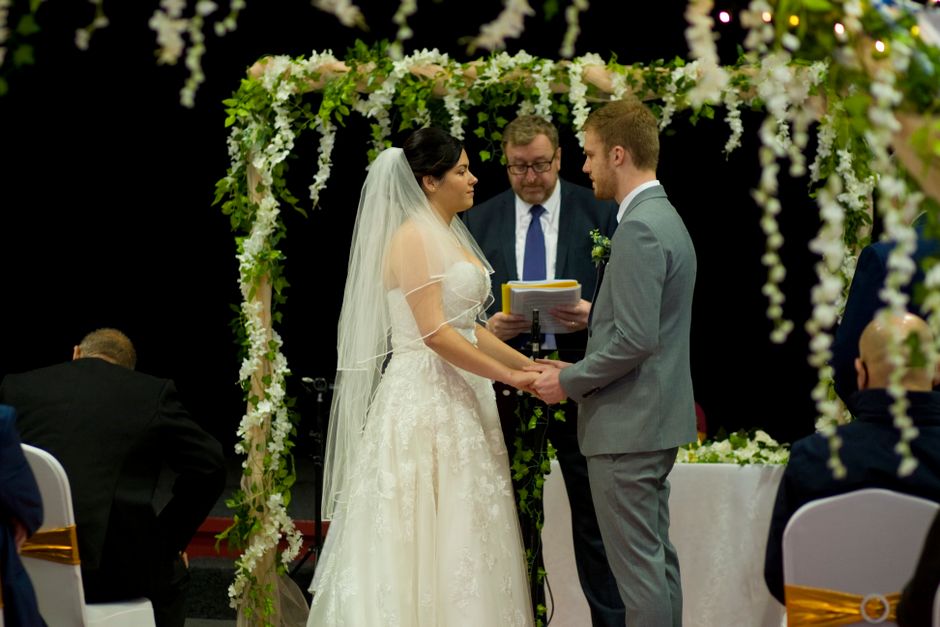
For example, if you want the bridal party to feel linked visually, you could pair a strong bridal bouquet with matching or softened versions in the attendant flowers from the wedding collection. A well-chosen set such as a bridal bouquet and supporting bridesmaid bouquet can do a lot of the work for you without needing extra decoration everywhere.
Common Mistakes to Avoid
The biggest floral mistakes are rarely about the flowers themselves. They are usually about fit, timing, or expectation. Here are the ones we see most often.
Choosing flowers from a picture without thinking about the room
A bouquet can look stunning on its own and still be wrong for the venue. A case study prevents that by showing the design in context.
Overcrowding the space
More flowers are not always better. If every surface is full, guests lose sight of the venue's own character. A little breathing room usually improves the overall effect.
Ignoring practical access
If flowers have to be carried through narrow doors or set up quickly between events, the design should reflect that. Tall, fragile, or overly complicated arrangements can create avoidable pressure.
Forgetting about the photos
What looks balanced in the room can sometimes disappear on camera. Ask where the photographer is likely to stand and how the flowers will frame the shot. Honestly, that one detail saves a lot of regret later.
Not checking flower durability
Some blooms are more resilient than others in warm rooms, during long ceremonies, or through an extended reception. A knowledgeable florist will guide this, but it helps to ask direct questions if the day is long or the room is warm.
Leaving colour decisions too late
Colour is emotional, but it is also practical. Late changes can affect availability, consistency, and overall styling. Decide early enough to keep options open.
Tools, Resources and Recommendations
You do not need a suitcase full of tools to plan good wedding flowers. But you do need a few clear resources so decisions are not made in a rush at 10pm with three browser tabs open and a cup of tea gone cold.
- Venue photos: use real photos of the University of Surrey space to understand scale and light.
- Colour swatches: useful for checking how dresses, linens, and flowers sit together.
- Guest-flow sketch: a simple room sketch helps identify where flowers will be seen most.
- Flower reference pages: browse styles such as luxury flowers or florist choice designs to see different presentation styles.
- Seasonal thinking: choosing blooms that are naturally available around your date can make planning simpler and often more cohesive.
For wedding planning specifically, it also helps to explore related finishing pieces that keep the whole look aligned. Buttonholes, corsages, and table arrangements may seem small on their own, but together they shape the guest experience. If you want a neat starting point, have a look at wedding corsages and the broader weddings collection to see how the elements fit together.
If the flowers are being delivered or installed as part of a wider order, make sure you understand delivery timing and care instructions too. A florist's own delivery and flower-care information is often more useful than generic advice, because it reflects how the arrangements are actually handled.
Law, Compliance, Standards, or Best Practice
For wedding flowers, the main concerns are usually not legal in the strict sense, but practical best practice and venue requirements matter a lot. If you are working at a university venue, there may be rules around access, setup times, candles, fixing methods, flooring protection, and waste removal. These are not dramatic things. They are just the kind of details that keep the day running smoothly.
Good practice usually includes:
- checking venue access times well in advance
- confirming whether anything can be attached to walls, doors, or furniture
- ensuring arrangements are stable and safe for guest movement
- using considerate materials that do not stain or damage surfaces
- following any venue-specific instructions on storage, setup, and collection
It is also wise to be clear about substitutions. Fresh flowers are subject to seasonal availability, and reputable florists often need to substitute a bloom or two while keeping the overall look intact. That should be discussed openly, not treated as a surprise.
On the sustainability side, many couples now want to know how flowers are sourced, how much foam or plastic is used, and whether arrangements can be repurposed after the ceremony. If that matters to you, ask early. The best answer is the one that fits your priorities and the venue's reality, not just a nice slogan. The sustainability information can be a useful reference point when you are weighing those decisions.
Options, Methods, or Comparison Table
There is no single "right" way to style university wedding flowers. The right method depends on budget, venue size, and the kind of atmosphere you want to create. Here is a useful comparison of common approaches.
| Method | Best for | Strengths | Possible drawback |
|---|---|---|---|
| Minimal accent styling | Small ceremonies or tight budgets | Clean, affordable, simple to install | May not shift the room enough |
| Feature-point styling | Couples who want impact without full-room coverage | Strong visual focus, efficient use of flowers | Requires good placement choices |
| All-round room styling | Larger weddings and formal receptions | Very cohesive and immersive | More planning, more budget, more moving parts |
| Collection-led styling | Couples wanting matching bouquets, buttonholes, and table pieces | Strong visual consistency and easier selection | Can feel repetitive if not balanced carefully |
If you are aiming for a polished wedding look, collection-led options can be especially helpful because they keep the bridal bouquet, bridesmaid flowers, and groom's details in the same visual family. That is often the easiest way to make the "before and after" result feel intentional rather than improvised.
Case Study or Real-World Example
Here is a realistic example of how this kind of floral transformation typically works at a university venue like the University of Surrey.
Before: the room is functional, tidy, and a little restrained. The tables are in place. The lighting is even. The architecture does the job but does not exactly whisper romance. It feels like a good blank canvas, which is usually what you want, but on its own it does not yet feel like a wedding.
After: the space now has a defined focal point near the ceremony area, with soft white and green arrangements used to pull the eye forward. Table flowers add warmth without blocking conversation. The bridal bouquet echoes the main room palette, while buttonholes and bridesmaid flowers keep the party visually connected. Suddenly the room feels gentler, more welcoming, and much more like the couple's day.
The key lesson from this example is not that more flowers were used. It is that the flowers were placed where they could change how the room felt. That is what a good case study should reveal: not just a transformation, but the logic behind it.
Maybe the most useful part is this: the space still looks like itself. It has not been forced into something unrecognisable. That balance is usually the sweet spot. Guests notice the atmosphere, not a floral power struggle with the venue. Which, to be fair, is exactly the point.
If you are exploring bouquet styles for a similar effect, arrangements like white bridal bouquets or related pieces such as matching bridesmaid bouquets can create a clean, timeless feel that works well in formal or modern spaces.
Practical Checklist
Use this checklist if you are planning a University of Surrey wedding flowers setup and want a smoother, more reliable result.
- Have I seen the venue photos from more than one angle?
- Do I know which areas need the biggest floral impact?
- Have I chosen a colour palette that suits the room lighting?
- Are bridal, bridesmaid, and buttonhole flowers visually linked?
- Have I checked setup access, timing, and collection arrangements?
- Do I understand any venue rules about fixing methods or decoration limits?
- Have I thought about how the flowers will look in photos?
- Is the overall design realistic for the budget and the space?
- Do I know what substitutions are acceptable if a bloom is unavailable?
- Have I asked about care, hydration, and longevity for the arrangements?
And one more, because it saves stress: have I kept a copy of the final brief somewhere easy to find? Sounds obvious. It still gets missed all the time.
Get a free quote today and see how much you can save.
Conclusion
A good University of Surrey wedding flowers case study before and after is valuable because it shows more than floral style. It shows how flowers change the mood of a venue, how they frame the day, and how thoughtful design can make a clean or formal space feel warm, personal, and memorable. That is the real win.
If you are planning your own wedding flowers, focus on the room first, the photos second, and the details after that. In the end, the best result is usually the one that feels effortless to guests, even though it took a fair bit of care behind the scenes. That is the magic, really.
And when the flowers are right, the whole day tends to breathe a little easier.
Frequently Asked Questions
What does a University of Surrey wedding flowers case study before and after usually show?
It usually shows the venue before any floral styling, then the same space after the flowers, bouquets, and table arrangements have been installed. The contrast helps you see how much visual impact the design creates.
Why are before-and-after flower photos useful for wedding planning?
They help you judge scale, colour, and atmosphere in the real venue rather than relying on sample pictures alone. That makes it easier to choose the right style and avoid surprises on the day.
What flowers work best for a university wedding venue?
That depends on the room, season, and desired look. White, green, blush, and mixed seasonal combinations are often popular because they feel elegant without overwhelming the space.
How do I know if my floral budget is enough?
Start by prioritising the most visible areas, such as the ceremony focal point or reception tables. A florist can usually suggest where the greatest visual return will come from, which helps you spend more effectively.
Should the bridal bouquet match the venue flowers exactly?
Not exactly. It should complement the venue styling and overall colour palette, but it can still have its own shape and personality. A bit of variety often looks more natural in photos.
How far in advance should wedding flowers be booked?
As early as you can, especially if you want a specific style, season, or collection. Early booking also gives you more time to refine the brief and confirm practical details with the venue.
Can flowers really change the feel of the University of Surrey venue?
Yes, absolutely. Flowers soften hard lines, add warmth, and define focal areas. Even modest arrangements can make a room feel more personal and finished.
What is the biggest mistake couples make with venue flowers?
Choosing flowers in isolation, without thinking about the room. A design that looks lovely in a photo can still be too small, too busy, or the wrong tone once it is placed in the actual venue.
Are simple wedding flowers better than dramatic ones?
Neither is automatically better. Simple designs can be elegant and cost-effective, while dramatic designs can be brilliant for larger rooms. The best choice depends on the venue and the look you want.
How can I make sure the flowers photograph well?
Ask where the main photo angles will be and make sure the key arrangements frame those views. Good placement matters just as much as the flowers themselves, maybe more.
What if a flower I want is not in season?
A good florist will suggest alternatives that keep the colour, shape, and overall feel of the design intact. It is better to plan a flexible palette than to cling too tightly to one bloom.
Do I need a full-room flower scheme for a good before-and-after effect?
No. A few strong focal arrangements can create a very clear transformation if they are placed well. The trick is impact, not quantity.
Can I use the same flower style for the ceremony and reception?
Yes, and that often works well. Just be sure the designs are adapted for each space so the styling feels consistent rather than copied and pasted.
What should I ask a florist before confirming my wedding flowers?
Ask about design approach, setup timing, substitutions, venue access, care instructions, and how the final arrangement will be adapted to the room. Those questions help you avoid a lot of common headaches.


